Climbing knowledge

The world of sport climbing

A closer look at how climbing evolved, what makes it unique, and how it impacts the body, mind, and lifestyle of climbers around the world.

History of Sport Climbing: From Mountain Peaks to Olympic Glory

Sport climbing has evolved from a simple method of reaching mountain summits into a modern high-performance sport testing strength, focus, and endurance.

Origins in Alpinism (19th–early 20th century)

Climbing began as part of alpinism in the 19th century, focused only on reaching summits. Climbers used heavy gear, hemp ropes, and pitons hammered into rock (aid climbing).

A key shift came when Paul Preuss promoted “free climbing,” where climbers rely only on natural rock features, with ropes used solely for safety.

Free Climbing Revolution (60s–70s)

In the 1960s–70s, Yosemite became the world center of climbing. Climbers like Royal Robbins and Yvon Chouinard began treating climbing as a lifestyle.

Focus shifted from summits to route difficulty, alongside a strong ethic of minimal impact on rock.

Birth of Sport Climbing (1980s)

In the 1980s, climbers in Europe began installing fixed bolts, allowing safer attempts on harder moves and shifting climbing toward athletic performance.

The first major competition, “Sport Roccia” (1985, Italy), marked the birth of sport climbing. The UIAA became the first governing body.
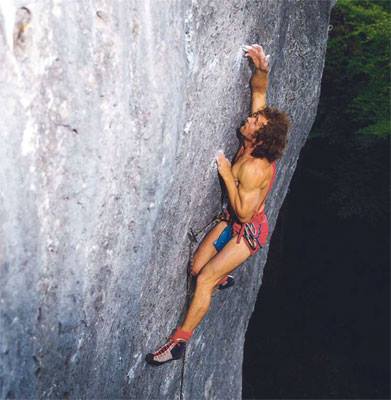
Indoor Climbing & Global Growth (1990s–2000s)

In the 1980s, climbers in Europe began installing fixed bolts, allowing safer attempts on harder moves and shifting climbing toward athletic performance.

The first major competition, “Sport Roccia” (1985, Italy), marked the birth of sport climbing. The UIAA became the first governing body.

The first Lead World Cup was held in 1989, followed by the 1991 World Championship. In 1998, bouldering was added to official competition.

In 2007, the IFSC was founded in Frankfurt, gaining IOC recognition the same year, paving the way for Olympic inclusion.

Modern gyms made climbing accessible worldwide, developing three disciplines:

  • Lead: 15–20m roped climbing
  • Bouldering: short, powerful climbs without ropes
  • Speed: timed races on a 15m wall

Olympic Era

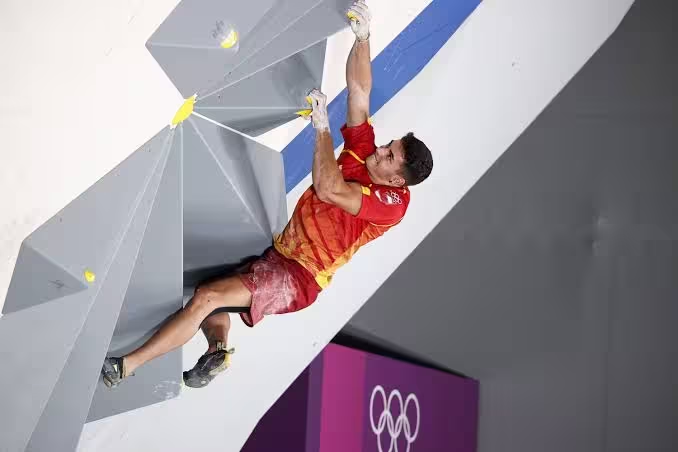
Sport climbing debuted at the Tokyo 2020 Olympics (held in 2021), confirming its global status.

Today, athletes like Adam Ondra and Janja Garnbret define a golden era of climbing performance.
Climbing Today

  • 30+ million active climbers worldwide
  • Rapid global growth of climbing gyms
  • Safer, lighter, more advanced equipment than ever

Conclusion

From alpine expeditions to Olympic arenas, sport climbing remains rooted in the same idea — overcoming gravity and pushing human limits.

History of Sport Climbing in Bosnia and Herzegovina

The history of sport climbing in the former Yugoslavia is deeply tied to its rich alpinist tradition. What began as training for difficult ascents in the Alps and Himalayas gradually evolved into a modern sport.

Early Alpine Schools (1930s–1970s)

In this period, climbing was not a separate sport but a skill within alpinism. Slovenia, due to its proximity to the Alps, became the cradle of vertical activity. Climbers like Klement Jug set early free climbing standards in the 1920s.

Areas such as Paklenica (Croatia), the Kamnik–Savinja Alps (Slovenia), and cliffs around Sarajevo (Romanija, Dariva, Bukovik) served as training grounds for technical development.

Rise of Free Climbing (late 1970s–early 1980s)

A major shift occurred when free climbing ethics spread across Yugoslavia, where gear was used only for protection, not progression.

1978 marked a turning point when Slovenian climbers like Iztok Tomazin brought ideas from the USA and Western Europe. Shorter, more technical sport routes began to appear.

In 1986, the “Marjan 86” event in Split became one of the first unofficial free climbing competitions. Bosnia and Herzegovina’s first sport climber, Edin Durmo, participated as a judge and introduced the idea of sport climbing to natural rock in BiH.

The Sarajevo School of Alpinism (SŠA) at Romanija and Dariva promoted free climbing as expedition training, but a group soon focused on the pure difficulty and beauty of shorter routes.

By the late 1980s, sport climbing began taking formal shape. The Yugoslav Mountaineering Association (UIAA member) followed global trends, and climbers began competing internationally. Climbing areas developed across the country, from Istria and Dalmatia to Romanija and Macedonia (Matka).

The first sport routes in Bosnia and Herzegovina were bolted in 1991 on Romanija by Edin Durmo.

Sport Climbing in Bosnia and Herzegovina

The history of sport climbing in Bosnia and Herzegovina is a story of enthusiasm, transition from alpinism to sport climbing, and strong resilience even in the hardest times.

For decades, mountains around Sarajevo (Romanija, Trebević, Bukovik) were training grounds for alpinists. The Dariva area became a key site where climbers trained technique for major alpine expeditions.

During the siege of Sarajevo, free climbing under sniper fire became one of the few ways to escape into normality. Climbers visited Dariva and Babin Zub, even raising the flag of the Republic of Bosnia and Herzegovina on the rock as a form of resistance and mental strength.

During the war, an improvised climbing wall was built at FIS Sarajevo, allowing training when outdoor climbing was impossible — one of the early foundations of sport climbing in BiH.

After the war (1992–1995), in 1997, the first official sport climbing area at Dariva was equipped with support from SFOR and commander Robert Ferrante (Italy), creating the first generation of sport climbers in Bosnia and Herzegovina.

Sport climbing in BiH did not start in gyms like elsewhere, but from the Sarajevo School of Alpinism.

Key contributors include:

  • Robert Ferrante (SFOR commander)
  • Muhamed Gafić (SŠA instructor)
  • Erkam Duraković (SŠA instructor)
  • Samir Mehić (SŠA instructor)
  • Muhamed Šišić (founder of “Yeti”)
  • Edin Durmo (first sport climber, founder of “Scorpio”)

Despite war damage, Bosnia and Herzegovina preserved its climbing community. Sarajevo and Zenica became bases for new clubs and artificial walls. “Yeti” was founded by Muhamed Šišić in Sarajevo, while “Snaga” and later “Scorpio” were founded by Edin Durmo in Zenica, forming the first generation of climbers across Dariva, Drežnica, and Kamenolom.

Early equipment was very limited. Climbers made harnesses from car seat belts and shoes from modified football shoes. Bolting was done with electric drills powered by car batteries, often using a running car to supply power.

Early competitions were organized by Muhamed Šišić (Yeti) at Dariva and Babin Zub, later continued by Edin Durmo in Zenica and Drežnica.

Development of Sport Climbing in Bosnia and Herzegovina

The second generation of climbing clubs grew from the first.

Adnan Ćatić from Sarajevo, multiple-time BiH champion and international competitor, founded “Red Point” in 2003 to promote sport climbing.

Edin Zuhrić founded “No Comment” in 2004, expanding the Sarajevo scene. Together with Salih Mulaosmanović, they developed Špicasta Stijena above Sedrenik, where Salih later made the first 8a+ in Bosnia and Herzegovina (“No chipping no cry”).

Climbing then expanded across the country with clubs such as “No Limit,” “PD Željezničar,” “Extreme,” “Solo,” “Neretva,” and “Blagaj Climbing.”

Mostar became a key hub through ASPK “Neretva” and Vedran Ugljen, who developed one of the best bouldering gyms in BiH. Salih Mulaosmanović moved there and helped develop Drežnica, Stolac, and Rupa.

Banja Luka followed with major development through clubs “Extreme” and “Solo,” building gyms and developing over 10 outdoor areas such as Pecka and Tijesno Canyon. Festivals like Pecka Climbing Fest and Drill and Chill brought global attention.

Pecka produced the first 8b/8b+ routes in BiH, while Tijesno Canyon reached 9a and 9a+ levels in 2018 with visits from Adam Ondra.

Blagaj also developed through Salih Mulaosmanović, who helped equip Vulin Potok and surrounding areas. The first outdoor artificial wall in BiH was built there, leading to the founding of “Blagaj Climbing.”

International climbers like Vanja Reichl contributed heavily, mentoring local climbers and developing routes.

Later, Petar Bekavec (“Splićo”) expanded climbing in Mostar and Blagaj. The Blagaj Climbing Fest started in 2021 and continues to grow.

In Bihać, during the migration crisis, members of the Italian club “Flamingo Loophole” developed new areas (Prskalo, Iron Feet, La Quercia) and built a gym later taken over by KES “Spectrum.”

In Mostar, Petar Bekavec developed Podružje, while Denis Serdarević later became the first Bosnian climber to send 8b (“Uranus” in Austria).

Finally, in 2025, a major milestone was reached: the climbing federations of FBiH and Republika Srpska signed an agreement in Banja Luka, forming the national Sport Climbing Federation of Bosnia and Herzegovina and paving the way for a national team.

Benefits of Sport Climbing

Sport climbing is a highly rewarding outdoor or indoor activity that combines physical effort, cognitive engagement, and psychological resilience. It is often called “vertical chess” due to the unique mix of movement and problem-solving on the wall.

Physical Benefits: Multimodal Training

Unlike isolated gym exercises, climbing activates the entire body through functional movement.

  • Functional strength development: Focus on core (abdominals and back), forearms, and finger strength, which is rare in most sports.
  • Flexibility and mobility: Requires a large range of motion in hips and shoulders, improving overall joint mobility.
  • Cardiovascular endurance: Although often seen as anaerobic, longer routes significantly raise heart rate and improve aerobic capacity.
  • Proprioception and balance: Develops a strong sense of body position in space, improving coordination.
  • Neural proprioceptive input: Constant balancing on small holds activates the cerebellum, responsible for coordination and fine motor control.

Cognitive Benefits: “Problem-Solving Under Pressure”

This is what sets climbing apart from most basic sports.

  • Working memory and thinking: Climbers must visualize sequences before climbing (mental rehearsal). Studies suggest working memory can improve significantly through such practice.
  • Visuospatial processing: “Reading routes” activates the parietal lobe, improving spatial awareness and abstract problem-solving.
  • Executive function: Quick decision-making under fatigue strengthens mental agility.
  • Neuroplasticity: Physical and cognitive demands stimulate BDNF release, supporting the growth of new neurons and synapses.

Psychological Impact and Mental Health

In clinical psychology, climbing is increasingly referred to as “therapeutic climbing.”

  • Mind–body connection: Physical progress is directly tied to focus and emotional stability.
  • Stress and fear management: Controlled exposure to height helps reduce anxiety in everyday life.
  • Flow state: Deep focus during climbing lowers cortisol and may ease depressive symptoms.
  • Resilience: Repeated failure and attempts build strong psychological resilience transferable to daily life.
  • Self-confidence: Each completed route provides measurable achievement and reinforces self-perception.
  • Preventive health: Due to stress reduction and cognitive benefits, climbing supports prevention of modern lifestyle diseases.

Social and Environmental Aspects

  • Trust and community: The climber–belayer relationship is based on complete trust, building strong social bonds.
  • Social integration: Although performed individually, climbing is highly social through shared problem-solving and support.
  • Connection with nature: Outdoor climbing encourages environmental awareness and time in nature, important in modern sedentary lifestyles.

Sport Climbing as a Safe Outdoor Activity

Sport climbing is considered one of the safest outdoor sports while offering direct contact with nature and significant health benefits. Spending time outdoors is often referred to as “green therapy” or “ecotherapy,” with proven positive effects on both physical and mental health.

Regular exposure to nature supports vitamin D synthesis, helps prevent “computer vision syndrome,” improves sleep quality through circadian rhythm regulation, reduces stress, and enhances overall well-being. Natural light and fresh air help regulate the body’s internal biological clock, while excessive indoor time can disrupt sleep and increase fatigue.

Even short daily outdoor exposure (around 20 minutes) can improve energy, motivation, and mental resilience. Research also shows lower depression rates in rural populations compared to urban environments, highlighting the importance of nature for mental health.

Physical activity outdoors reduces the risks of a sedentary lifestyle, such as fat accumulation and decreased bone density. Combining climbing with time in nature is one of the most effective ways to support both mental and physical development across all ages.

Overall, regular outdoor activity not only improves health but also contributes to long-term vitality and quality of life.

Climb Higher, Think Sharper, Live Better

Explore how climbing shapes body, mind, and community